
Your Face is a Problem Again. Vogue Says So.
From “resting bitch face” to “cortisol face,” there’s always a new way to pathologize women for simply existing.

Are you a stressed-out woman, with a face?
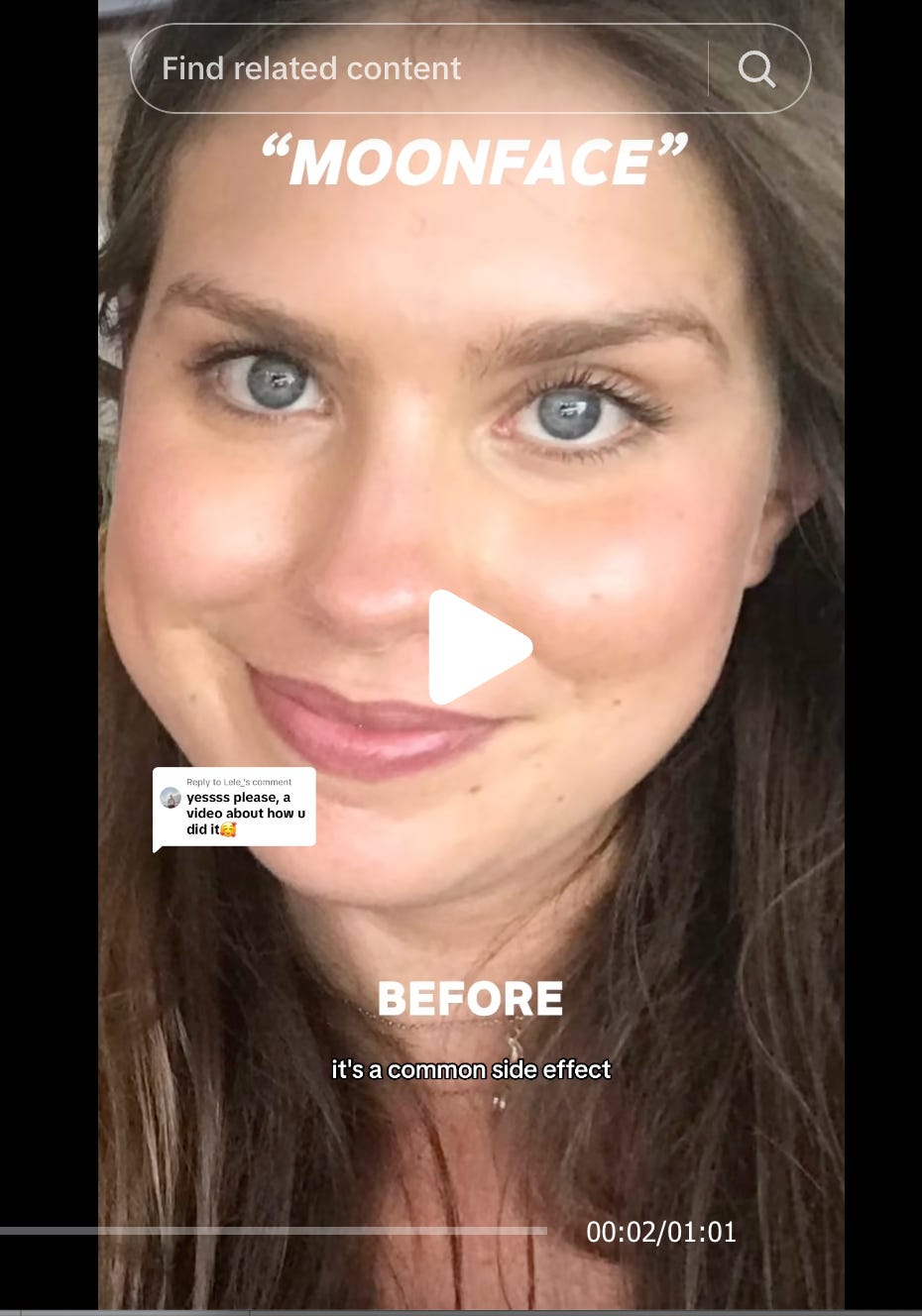
Well, then Vogue would like you to start worrying that you have “cortisol face”—a non medical term to describe the face puffiness that can result from very high levels of stress. AND ISN’T EVERYONE STRESSED right now, what with all the guns, deadly protests the world over, and martial law coming for American cities? The daily mindfuck of waking up, washing your face, feeding your kids, and pretending everything’s fine—when it’s clearly, cosmically not fine? Is the stress showing up on your skin? Your eye twitch? Those eyebrow hairs you keep pulling out at red lights? Your cortisol levels probably are spiking and honestly your concealer’s doing its goddamn best, m’kay? Unfortunately, it’s not enough.
So sure, you might look like you’ve aged a decade since last January—but please don’t call it “cortisol face”.
It was bad enough when social media coined the term, prompting women everywhere to self-diagnose in unison. The phrase started gaining traction on TikTok in 2024, when wellness influencers began hawking miracle cures left and right. Now, Vogue is bringing it back—ready to haunt your feed all over again.
Cortisol is a hormone produced by the adrenal glands that helps regulate the body’s response to stress. But that’s not all! It also regulates how your body uses glucose for energy, helps decrease inflammation, regulates blood pressure, and helps control the sleep-wake cycle. But are high levels of cortisol a widespread epidemic? Not even close.
The actual rate of high cortisol levels—also known as Cushings syndrome—is 40 to 70 people out of every million people. Typically characterized by a fuller, puffier looking face (or “Moon Face”), Cushing’s syndrome happens when your body’s stress hormone, cortisol, goes into overdrive. The usual suspects? Overactive adrenal glands or long-term steroid use (hi, prednisone). It can point to deeper issues—like autoimmune conditions or blood disorders. Basically: it’s your body saying, ‘something’s up.’
Remember when the internet came for Amy Schumer when she was promoting season 2 of her series, Life & Beth? (Turns out she actually did have Cushing’s syndrome.)

So far, Vogue has published two articles on the topic of cortisol face in September alone, and we’re only a wee bit more than halfway through the month. The first piece was, “Got “Cortisol Face?” 5 Microhabits to Reduce It” which warns readers:
When it comes to skin, excessive cortisol can be just as damaging, resulting in a loss of collagen and elastin that leads to premature aging, wrinkles, and sagging.
The TLDR is that you can allegedly fight all that jowly, midface droop with “microhabits” like ten minutes of self-care, an anti-inflammatory diet, conscious breathing, and something called “neuroactive cosmetics.” (Yes, the air quotes are doing heavy lifting here.)
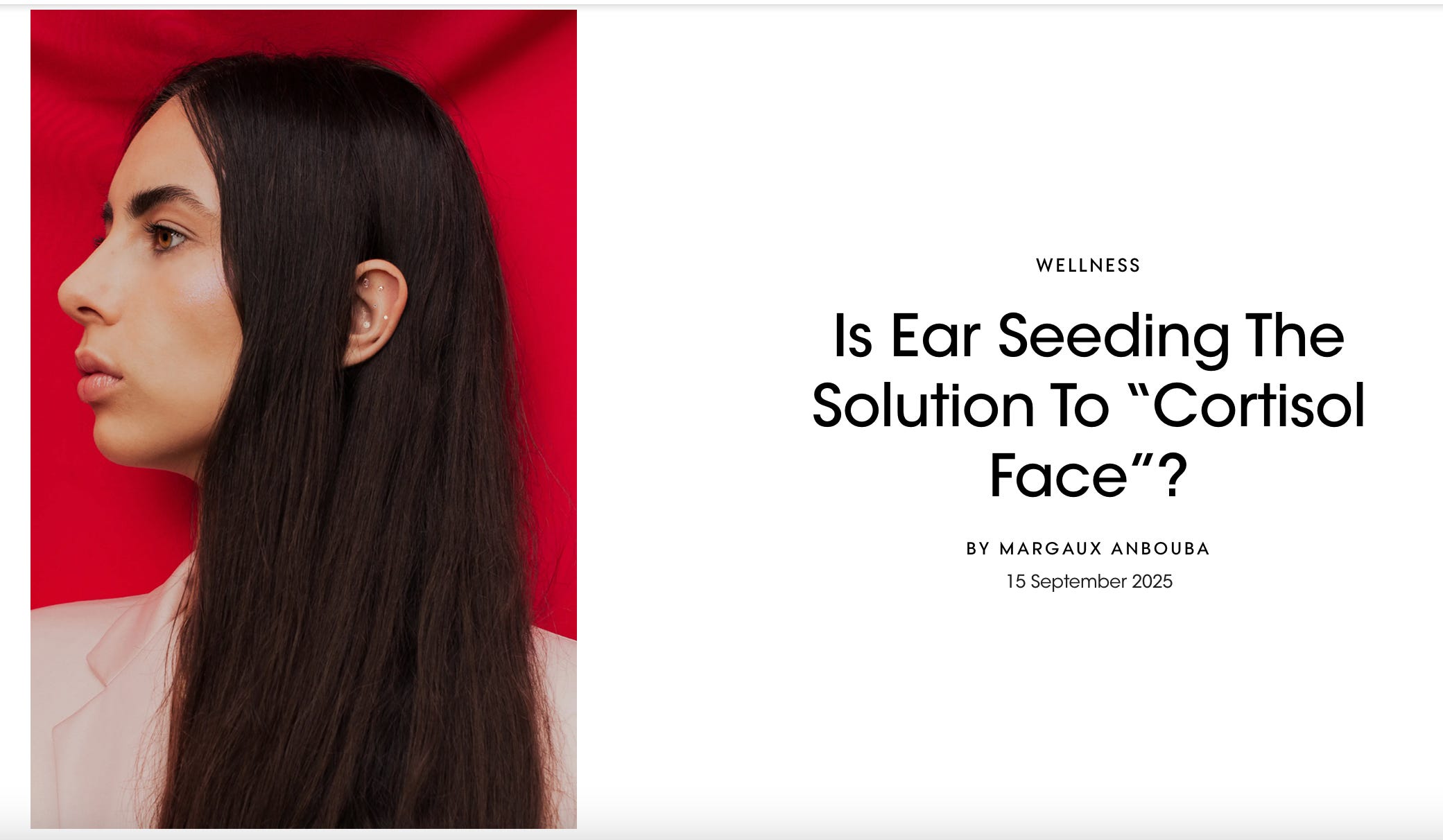
The second piece, courtesy of British Vogue, dropped on September 15th, and touts ear seeding as the next wellness fix. Rooted in Chinese medicine, the practice is based on the belief that the ear acts as a mini-map to the body’s inner workings. To help us non-experts understand it all, Vogue taps Ava Lee—the founder of K-beauty brand By Ava—to walk us through the how and why:
“There is an ear reflexology map where your ear literally reflects every system and organ of your body,” Ava tells Vogue’s senior beauty editor, Margaux Anbouba. Anbouba then dives into her own ear seeding experience—which, judging by the tone of the piece, was a resounding success:
. . . the moment the application is complete, I swear… I start to feel it. Visually (and sort of physically), I’d compare the result to the Skims Face Wrap, but for your ears. Also, my ears feel warm. Second, I start to feel drainage going down the back of my throat, all while we sit there. By the time I leave my meeting with Lee, I have started sweating – one of the signs that my lymphatic system is working.

Personally, I am a big fan of acupuncture, even though my first forays into it were kind of sketchy. The first person to practice acupuncture on me (many years ago) was a young Chinese medicine practitioner who instructed me to take off my pants before every session began, watched me through the slit in the sliding privacy door, and then stuck needles everywhere but my ass and upper thighs. It took me going half a dozen times to realize things were suss, and never return there again. Through trial and error, I now go to a wonderful woman in Union Square who gives me privacy, covers me in a towel (can you believe!?), and has the lightest touch of any acupuncturist I’ve known. But in the few times I’ve tried ear seeding, I can’t say I felt much of anything let alone noticed a slimming in my face. I’m happy for Anbouba though!

The latest face-shaming trend? If it’s not “moon face” or “cortisol face,” it’s “Ozempic face”—a term born online, yet again reminding women that our faces are always up for public critique and that our bodies are a string of problems waiting to be fixed.
“Ozempic face”, as defined by the National Library of Medicine, describes the extreme volume loss that can happen with GLP-1 drugs like semaglutide—aging the face faster than expected. CNN recently reported that the widespread popularity of GLP-1s may even be driving a wave of plastic surgery. According to the American Society of Plastic Surgeons (ASPS), 40% of GLP-1 users are considering cosmetic procedures, and 1 in 5 already have. Make it make sense.

Not vibing with cortisol face or Ozempic face? There’s always “computer face”—the charming new term for how staring into screens all day is allegedly aging us in fast-forward.
I miss the good old days when all we had was “Resting Bitch Face”. Simpler times. Now it’s “cortisol face,” “moon face,” “Ozempic face.” For women especially, every expression is suspect, every feature a flaw waiting to be named. But what if we opted out? What if we stopped letting magazines and wellness influencers turn our bodies into problems to solve?
What if our faces got to tell the truth?
This is so well researched, when I see you next I want you to study my face and chime in on it ( I think it is still in rested bitch face mode!)